
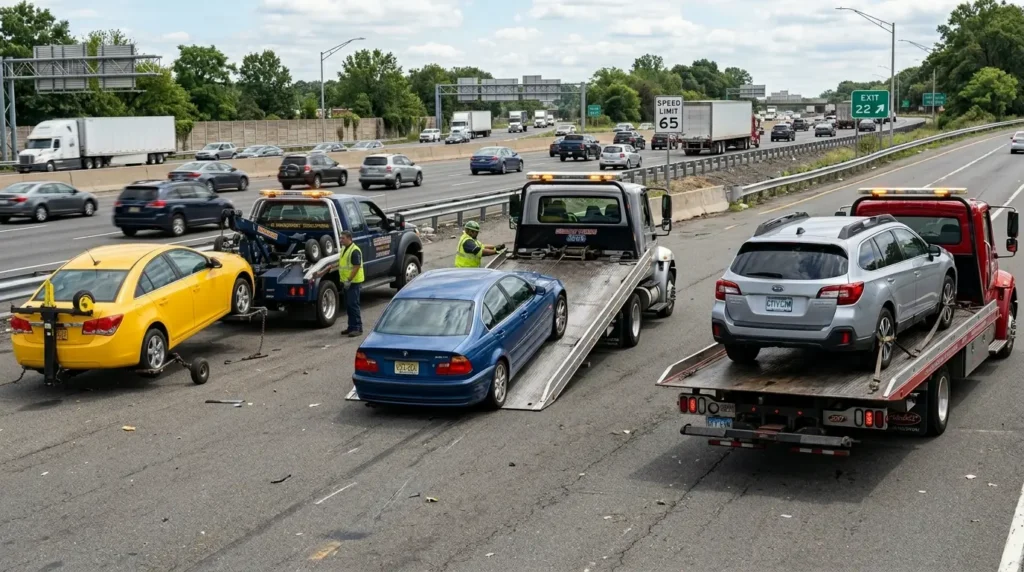
Most people don’t think much about how their car gets towed until they’re stuck on the side of the road. At that point, you just want your car moved, and you trust whoever shows up to do it right. But many car owners don’t realize that not every car can be towed the same way. The type of drivetrain your car has changes everything about how it should be handled.
Getting this wrong isn’t just a minor mistake. Towing a car the wrong way can cause serious damage to the transmission, transfer case, and other key parts under the hood. These repairs can cost hundreds or even thousands of dollars.
So before you ever need a towing in Brooklyn, it’s worth understanding the difference between AWD, FWD, and RWD and why it matters so much when something goes wrong on the road.
What AWD, FWD, and RWD Mean
These three-letter combinations describe how a car sends power from the engine to its wheels. Each one works differently, and each has parts that can fail if towing is handled improperly.
- FWD (Front-Wheel Drive): The engine drives only the front two wheels. This is the most common setup in everyday cars. Honda Civics, Toyota Corollas, and most family sedans fall into this group.
- RWD (Rear-Wheel Drive): The engine drives the rear wheels. You’ll find this configuration in pickup trucks, older American cars, and most sports cars.
- AWD (All-Wheel Drive): Power is sent to all four wheels at the same time. Most modern SUVs, crossovers, and vehicles like the Subaru Outback or Ford Explorer use AWD.
When a car moves normally on the road, all these drivetrain parts spin and work together while the engine runs. But if those same parts spin while the car is being towed with the wheels on the ground and the engine off, damage builds up quickly. There’s no lubrication, no power, and the parts grind against each other.
Why Towing the Wrong Way Can Be Expensive
When a tow truck moves a car with some wheels still on the ground, those wheels spin as the truck drives. If those wheels are connected to the drivetrain, they start moving the transmission and other internal parts, keeping everything lubricated even when the engine is off.
This creates heat and friction inside the drivetrain, which wears parts down or breaks them. Parts commonly damaged by improper towing include:
- The transmission
- The differential
- The transfer case (mostly a concern in AWD vehicles)
- The driveshaft
Replacing any of these parts is not cheap. This is exactly why knowing the right tow method for each car type matters so much, and why towing in Brooklyn should always be handled by someone who understands these differences.
Read More: What to Do When Your Car Breaks Down in Brooklyn
The Right Way to Tow an FWD Car
FWD cars are the most straightforward. Since the engine powers the front wheels, those are the parts you don’t want dragging on the ground.
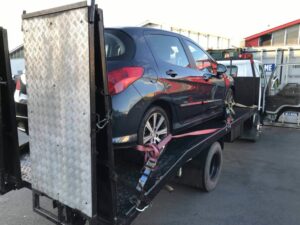
The safest option for any car, including FWD, is always a flatbed tow truck. With a flatbed, all four wheels come completely off the ground. Nothing spins, and nothing gets damaged.
If a flatbed isn’t available, a wheel-lift truck that lifts the front wheels and lets the rear wheels roll is the next safest option. The back wheels of an FWD car aren’t connected to the engine or transmission. They roll freely without causing any harm to the car.
What you should avoid with an FWD car:
- Lifting the rear wheels and leaving the front wheels dragging on the road
- The front axle and transmission parts spin with no lubrication from the engine
- Even a short tow done this way can cause lasting transmission damage
The Right Way to Tow an RWD Car
RWD cars work in the opposite direction. Power goes to the rear, so the rear wheels must remain off the ground.
A flatbed is still the best choice here. But if only a wheel-lift truck is available, it should lift the rear wheels and allow the front wheels to roll on the road. The front wheels of an RWD car are only for steering; they’re not part of the drivetrain, so they can roll without causing problems.
A few extra things worth knowing about RWD vehicles:
- Some older RWD trucks can be towed with the rear wheels down if the driveshaft is disconnected first
- This is something only a trained tow driver should do, it’s not a DIY shortcut
- Even if someone says a short tow is fine without a flatbed, it’s always better to ask about one first
Towing an AWD Car: The Rules Are Strict Here
AWD vehicles require the most careful handling when towing in Brooklyn. All four wheels are connected to the drivetrain, so there is no “safe” set of wheels that can roll on the ground without affecting the system.
If even two wheels of an AWD car remain on the road during a tow, the drivetrain continues to run on its own. This places heavy stress on the transfer case, which is one of the most expensive parts to replace in an AWD vehicle.
The only correct way to tow an AWD vehicle is on a flatbed truck, with all four wheels completely off the ground. There is no other safe option.
Some AWD vehicles have a tow mode or a neutral setting that disconnects the drivetrain, but not every AWD car comes with this feature. Even for those that do, you’d need to consult the owner’s manual carefully before relying on it.
If you drive an AWD vehicle, here’s what to do any time you need a tow:
- Tell the tow driver right away that your car is AWD before anything gets hooked up
- Ask specifically for a flatbed; don’t settle for a wheel-lift
- Check your owner’s manual to see if your car has a tow mode
- Don’t let anyone convince you that a short tow with the wheels down is okay because it isn’t.
Short distances can still cause serious damage inside an AWD drivetrain.
Does It Matter If the Car Is Automatic or Manual?
Both automatic and manual cars follow the same drivetrain rules above. However, automatic transmissions are slightly more sensitive when towing. Automatic transmissions need the engine running to circulate fluid through the system and keep everything lubricated. When the car is off and being towed with the wheels on the ground, that fluid doesn’t move. Heat and friction build up inside the transmission, and damage follows.
Manual-transmission cars can handle towing a bit better in some cases, but the FWD, RWD, and AWD rules still apply regardless of the gearbox type.
Also Read: Can Tow Trucks Handle Motorcycles, Trucks, or Luxury Cars?
What to Tell Your Tow Driver Before the Tow Starts
A lot of towing damage happens because the right information wasn’t shared up front. When calling for help, letting the driver know a few key points can save your car from unnecessary damage:
- Whether your car is FWD, RWD, or AWD (you can find this in the owner’s manual or by searching your car model online)
- If the car has low ground clearance, that could make loading harder
- Whether the car rolls freely or if the wheels are locked
- Any existing mechanical issues or damage already on the car
A professional tow driver will ask most of these questions on their own. But bringing it up yourself puts you in control and helps avoid any shortcuts.
A1 Towing Brooklyn is Here When You Need It
When something goes wrong on the road, the last thing anyone wants is more problems from a bad tow. At A1 Towing Brooklyn, our team is trained to handle all types of vehicles and knows exactly how each drivetrain should be handled. Our drivers identify FWD, RWD, and AWD vehicles and use the right equipment from the start, including flatbed trucks for any car that needs all four wheels lifted.
If you need towing in Brooklyn and want your car handled properly from the first call through the final drop-off, reach out to our team, and we’ll be there fast.