
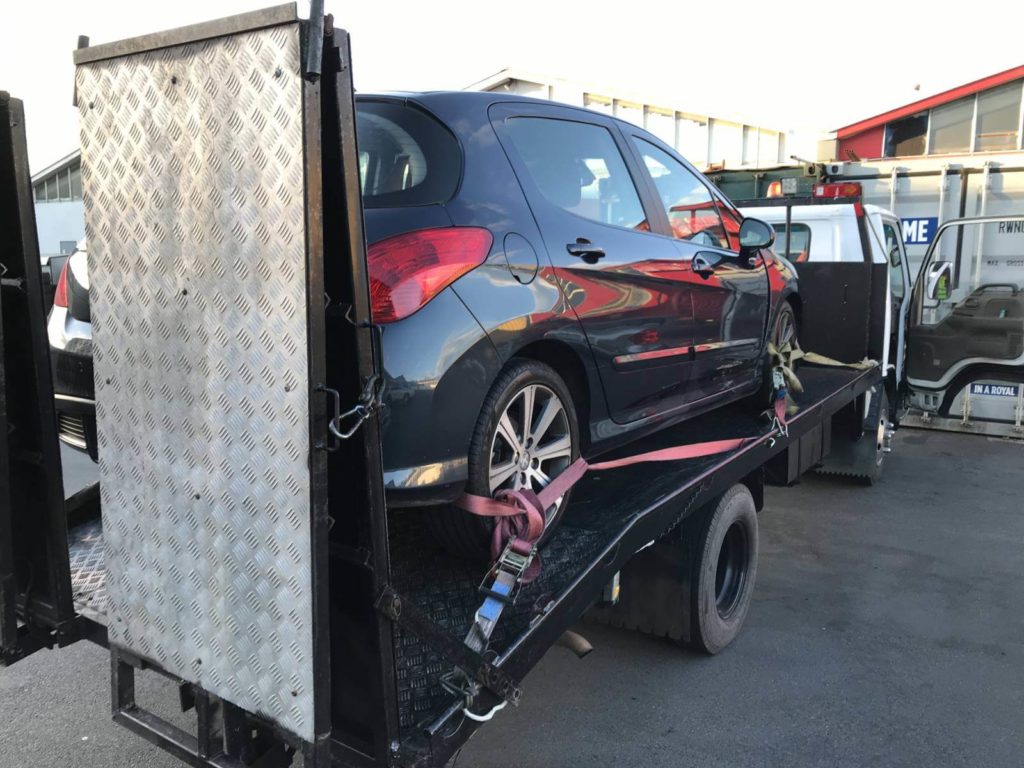
Not every disabled vehicle should be pulled with two wheels rolling on the road. For some cars, the wrong towing method can damage the drivetrain, suspension, wheels, bodywork, or undercarriage before the vehicle ever reaches the repair shop.
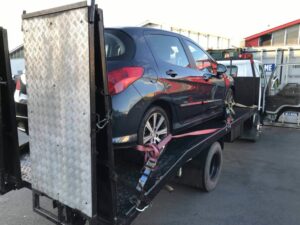
With flatbed towing in Brooklyn, the entire vehicle is loaded onto a level truck bed so all four wheels remain off the road during transport. That makes flatbed towing especially important for vehicles whose drivetrain, wheel position, ground clearance, or collision damage makes conventional wheel-lift towing risky.
However, “always” needs one qualification. The vehicle manufacturer’s towing instructions should take priority because different models can have very different procedures. Ford, for example, specifically warns that individual vehicles have different towing restrictions and procedures, while some intelligent AWD and 4WD models cannot be dolly-towed in certain configurations.
The following vehicle types are the ones most likely to require or strongly favor flatbed transport.
Flatbed Towing vs Wheel-Lift Towing
Understanding the difference makes the recommendations easier to follow.
Wheel-Lift Towing
A wheel-lift truck raises either the front or rear axle while the other two wheels remain on the road.
This can work well for many conventional front-wheel-drive or rear-wheel-drive vehicles when the correct axle is raised, and the manufacturer permits it.
Flatbed Towing
A flatbed truck:
- Tilts or lowers its bed.
- Winches or drives the vehicle onto the platform.
- Secures the vehicle.
- Carries all four wheels off the pavement.
Because none of the vehicle’s wheels have to rotate during transport, this method reduces the risk of drivetrain and rolling-component damage.
AWD Vehicles Often Need All Four Wheels Off the Road
All-wheel-drive systems are one of the most important reasons to request a flatbed.
In an AWD vehicle, the front and rear wheels can be connected through:
- Transfer case
- Driveshaft
- Differentials
- Electronic clutch systems
Allowing only one axle to rotate during towing can create internal speed differences the drivetrain was not designed to handle.
Ford’s towing guidance specifically states that some intelligent AWD and 4WD vehicles cannot be towed on a dolly and that vehicle-specific restrictions must be followed.
Why a Wheel-Lift Can Be Risky
Imagine the front wheels are raised while the rear wheels continue turning at road speed.
Depending on the drivetrain, those rotating rear wheels may cause components deeper in the AWD system to turn even though the engine is off.
That can potentially affect:
- Transfer case
- Transmission
- Couplings
- Differential components
The safest approach for many AWD vehicles is therefore keeping all four wheels off the pavement.
Tell Dispatch You Have AWD
Do not simply say:
“My car broke down.”
Provide:
- Year
- Make
- Model
- AWD designation
That helps the towing company choose the correct equipment before arriving.
Read More: Can All Cars Be Towed the Same Way?
Many 4WD Vehicles Also Require Special Towing
Four-wheel-drive vehicles need similar care.
Some 4WD systems can be placed into a special neutral-tow mode.
Others cannot.
Hyundai towing guidance for some four-wheel-drive vehicles states that the vehicle should be transported using a wheel lift with dollies or flatbed equipment so all wheels remain off the ground.
Ford, meanwhile, permits four-wheel-down towing for certain 4WD trucks only when specific procedures are followed, such as placing the transfer case into a designated neutral-tow position.
Do Not Assume All 4WD Trucks Tow the Same Way
Two pickup trucks may look very similar but have completely different towing instructions.
The correct procedure can depend on:
- Transfer-case design
- Transmission
- Model year
- Drivetrain package
Check the owner’s manual rather than relying only on whether the vehicle has a 4×4 badge.
Electric Vehicles Often Favor Flatbed Transport
EVs deserve particular attention because their electric drive systems can remain mechanically connected to the wheels.
Depending on the design, rotating the wheels during improper towing can turn the electric motor.
That can create problems for:
- Drive unit
- Reduction gear
- High-voltage system
- Regenerative braking components
Many manufacturers therefore provide strict recovery instructions for EVs.
Why Flatbeds Work Well for EVs
Flatbed transport keeps the drive wheels from rotating continuously during the trip.
It is particularly useful when an EV:
- Has completely lost power.
- Cannot shift normally.
- Has a drivetrain warning.
- Has been involved in a collision.
- Has locked wheels.
The towing company should still follow the specific manufacturer’s loading and tie-down procedures.
EV Weight Matters Too
Electric vehicles can be heavier than comparable gasoline cars because of their battery packs.
Dispatch should know the exact vehicle so the truck used has sufficient:
- Bed capacity
- Winch capacity
- Securement equipment
Vehicles With Damaged Wheels Should Be Flatbed Towed
A vehicle with a badly damaged wheel should not be forced to roll down the road.
Possible wheel-related problems include:
- Bent rim
- Broken wheel
- Missing wheel
- Wheel sitting at an unusual angle
- Severely damaged tire
Manufacturer guidance supports using dollies or flatbeds when loaded wheels or suspension components are damaged. Hyundai, for example, advises using wheel dollies or flatbed equipment when wheels or suspension components are damaged.
Flat Tires Are Not All the Same
One ordinary flat tire does not automatically mean every vehicle needs a flatbed.
If:
- Spare can be installed
- The wheel itself is undamaged
- Vehicle is otherwise functional
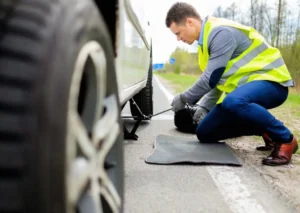
roadside tire service may solve the problem.
Flatbed transport becomes more appropriate when the wheel cannot safely rotate or the damage extends beyond the tire.
Suspension Damage Is a Strong Flatbed Situation
Collision or pothole damage can affect components that position the wheel.
Examples include:
- Control arm
- Ball joint
- Tie rod
- Strut
- Axle
- Wheel hub
A vehicle with a collapsed or badly damaged suspension may not be able to support its own weight correctly while rolling.
Hyundai’s towing instructions specifically treat damaged suspension components as a reason to use additional wheel support or a flatbed.
Watch for These Signs
After a collision or hard road impact, look for:
- Wheel leaning inward or outward
- Tire touching fender
- Wheel pushed backward
- Suspension visibly collapsed
- Vehicle sitting lower on one corner
Do not try to drive the vehicle simply because the engine still runs.
Broken Steering Is Another Flatbed Scenario
If a steering component has failed, the wheels may not track properly behind a tow truck.
Possible failures include:
- Broken tie rod
- Steering linkage damage
- Bent suspension
- Steering rack failure
A wheel-lift tow can become difficult when a wheel turns independently or refuses to remain straight.
A flatbed allows the vehicle to be secured without requiring normal steering behavior during transport.
Tell the Dispatcher What the Wheels Are Doing
Say if:
- One wheel points sideways.
- Steering wheel turns, but tires do not.
- Front wheels are locked.
- Car cannot be steered.
This may affect the loading equipment required in addition to the truck itself.
Collision-Damaged Vehicles Often Belong on a Flatbed
After a significant crash, the full extent of damage may not be obvious from the outside.
A vehicle could have hidden damage involving:
- Suspension
- Wheel hubs
- Axles
- Steering
- Cooling system
- Underbody
- Transmission
Even if it appears to roll, using the damaged wheels for transportation can make the situation worse.
Flatbed Towing Is Particularly Useful After a Crash When
- A wheel is damaged.
- Suspension is bent.
- Vehicle does not steer.
- Airbags deployed.
- Fluid is leaking.
- Bodywork touches a tire.
- Undercarriage is damaged.
The vehicle can be loaded rather than asking damaged systems to continue operating on the road.
Low-Clearance and Lowered Cars Benefit From Flatbeds
Sports cars, modified cars, and certain luxury vehicles sit very close to the ground.
Their vulnerable areas can include:
- Front splitter
- Side skirts
- Exhaust
- Underbody panels
- Rear diffuser
A conventional wheel lift can create steep approach or departure angles.
That increases the chance of scraping the body or undercarriage.
Loading Angle Still Matters With a Flatbed
A flatbed is not automatically safe just because the truck has a platform.
Extremely low cars may need:
- Extended ramps
- Wood or ramp extensions
- Low-angle loading
- Careful winching
Tell dispatch that the car is lowered or has unusually low clearance so the operator can prepare appropriately.
Exotic, Luxury, and Collector Cars Often Use Flatbeds
A high-value vehicle may technically be towable with another method but still be better suited to flatbed transport.
The reason is risk reduction.
These vehicles may have:
- Low ground clearance
- Expensive wheels
- Carbon-fiber bodywork
- Complex AWD systems
- Sensitive suspension
- Rare replacement parts
Keeping the entire vehicle on a platform minimizes the number of components that have to interact with the roadway during transportation.
Classic Cars Can Be Especially Sensitive
Older collector cars may also have:
- Unusual suspension designs
- Hard-to-source drivetrain parts
- Weak towing points
- Low bumpers
Manufacturer documentation may no longer be easily available, so conservative transport methods are often preferred.
Vehicles Stuck in Park May Need a Flatbed
A failed transmission, electronic shifter, or dead vehicle battery can sometimes leave a car unable to shift into neutral.
That makes ordinary rolling difficult.
Modern cars may also use:
- Electronic parking brakes
- Shift-by-wire systems
- Electronic transmission locks
A flatbed allows specialized equipment to move the vehicle onto the truck rather than forcing the drivetrain to rotate.
Loading May Require More Than a Winch
Depending on which wheels are locked, the operator may use:
- Wheel skates
- Dollies
- Specialized loading tools
Tell the dispatcher if the vehicle cannot:
- Shift into neutral
- Release parking brake
- Roll freely
before the truck arrives.
Transmission Problems Can Affect the Towing Method
A vehicle with suspected transmission or drivetrain failure should not automatically be towed with drive wheels rotating.
For example:
- Transmission is seized.
- Differential has failed.
- Axle is damaged.
- Transfer case is malfunctioning.
Allowing those components to continue turning during towing may increase damage.
A flatbed keeps those systems stationary during transport.
Does Every Front-Wheel-Drive Car Need a Flatbed?
No.
Many front-wheel-drive vehicles can be wheel-lift towed with the front wheels raised and the rear wheels rolling.
Kia and Hyundai manuals for some two-wheel-drive vehicles permit this type of towing while warning against towing with the driven front wheels on the ground.
That is why flatbed towing is not mandatory for every ordinary sedan.
Flatbed May Still Be Better When the Car Has
- Collision damage
- Bad rear wheel
- Locked brake
- Low clearance
- Long-distance transport requirement
Vehicle condition can change the recommendation even when drivetrain type normally allows wheel-lift towing.
What About Rear-Wheel-Drive Vehicles?
Some rear-wheel-drive vehicles can be transported with the rear wheels lifted and front wheels rolling.
Others have manufacturer-specific restrictions.
Long distances or certain transmission designs may require different procedures.
Again, the owner’s manual should settle the question.
Never Choose the Towing Method by Guessing
Before a tow, identify:
- Drivetrain
- Vehicle condition
- Manufacturer instructions
The cheapest method is not necessarily the correct one.
Motorcycles Are Commonly Transported on Flatbeds or Dedicated Carriers
A motorcycle obviously cannot be wheel-lift towed like a passenger car.
It needs to be loaded and secured in an upright, stable position using equipment intended for motorcycles.
A flatbed or dedicated motorcycle towing setup keeps the bike fully supported during transportation.
Securement Matters
Motorcycles need appropriate tie-down points and positioning.
Improperly tightening straps against bodywork or sensitive components can cause damage even if the motorcycle itself is safely off the road.
Long-Distance Transport Can Favor a Flatbed
Even when a vehicle can technically be wheel-lift towed for a short distance, flatbed transport may be preferable for a longer trip.
Keeping the vehicle entirely on the bed avoids:
- Tire wear
- Wheel-bearing rotation
- Drivetrain rotation where applicable
- Additional mileage on rolling wheels
This is especially useful when transporting:
- Collector vehicles
- Damaged vehicles
- Specialty cars
over a longer distance.
What Information Should You Give the Towing Dispatcher?
Correct information helps prevent the wrong truck from arriving.
Vehicle
Provide:
- Year
- Make
- Model
- Approximate weight if unusually heavy
- AWD, 4WD, FWD, or RWD if known
- Electric or gasoline/diesel
Condition
Explain whether:
- Wheels roll.
- Vehicle steers.
- Transmission shifts to neutral.
- Parking brake releases.
- Tires are damaged.
- Suspension is damaged.
- Car was involved in a collision.
A towing company can then choose between:
- Wheel-lift
- Flatbed
- Dollies
- Recovery equipment
Also Read: Can Tow Trucks Handle Motorcycles, Trucks, or Luxury Cars?
Flatbed Towing Checklist
Flatbed transport should be strongly considered when the vehicle is:
- AWD
- 4WD with towing restrictions
- Electric
- Low-clearance
- Exotic or collector
- Collision damaged
- Missing or damaged wheel
- Suffering suspension damage
- Unable to steer
- Stuck in park
- Experiencing drivetrain failure
Always compare these general guidelines with the owner’s manual.
When in Doubt, Keep All Four Wheels Off the Road
The vehicles most likely to require flatbed towing in Brooklyn are AWD and certain 4WD vehicles, EVs, cars with damaged wheels or suspension, vehicles with steering or drivetrain problems, low-clearance cars, and severely collision-damaged vehicles. Manufacturer towing instructions should always take priority because some vehicles have very specific procedures, even within the same drivetrain category.
At A1 Towing Brooklyn, we provide flatbed towing for vehicles that need all four wheels kept off the roadway during transport, including damaged cars, AWD and 4WD vehicles, low-clearance models, and other vehicles that require careful loading. If you are unsure which type of tow truck your vehicle needs, contact us with the year, make, model, drivetrain, and condition so we can send equipment suited to the situation.